Studying in Cologne: Carnival, the Cathedral and a New University of Excellence
Short answer
Cologne, with 1.1 million people, is a lively student city known for its carnival, its cathedral and a wide choice of universities. The University of Cologne became a University of Excellence in October 2026. A room in a shared flat averaged €641 a month in 2025, and residences house only a small share of students, so start your search early.
Cologne
With 1.1 million inhabitants, Cologne is North Rhine-Westphalia’s largest city and one of Germany’s most international, with a large Turkish community among many others. It is very close to the state capital Düsseldorf and to the former federal capital Bonn, and the three cities keep up a friendly rivalry that locals love.
With many universities and a huge student population, Cologne is a true student city, thanks to its carnival, student pubs, clubs and cultural life. The University of Cologne became a German University of Excellence in October 2026. TH Köln and the Cologne University of Music and Dance, known across Europe, are among the city’s other leading institutions.
Cologne was largely destroyed in the Second World War. Photos from that time hang inside the famous cathedral, and looking at them you witness the human tragedy of war once more. You cannot help admiring the discipline and perseverance with which the cathedral was rebuilt.
Apart from the historic buildings, architecture was not a priority in the rebuilding; you will love Cologne for its people rather than its beauty. People from Cologne are known as friendly and open. As in any big city, watch your belongings in crowded places: we had our own encounter with a pickpocket here.
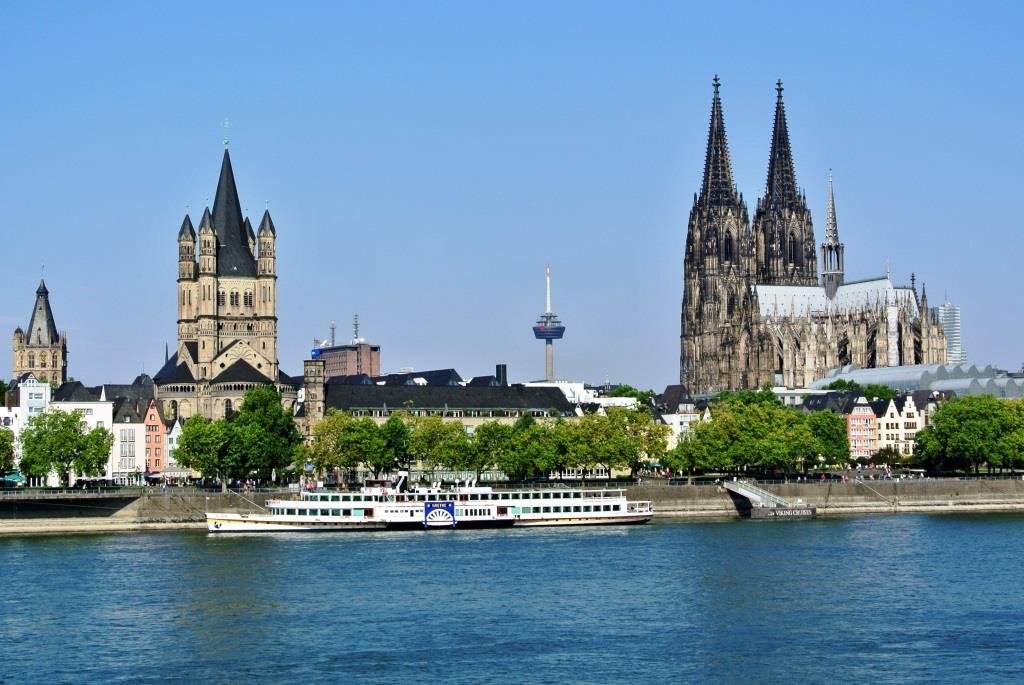
Boat trips on the Rhine in Cologne
Düsseldorf is smaller, more expensive and, to my eye, prettier. Bonn, just south of Cologne, is calm and orderly (see studying in Bonn). Both are about half an hour from Cologne by train.
For choice of programmes, though, Cologne offers far more than Bonn or Düsseldorf. The University of Bonn is old and renowned; the University of Cologne is bigger and better known. Because the cities are so close and the Deutschlandsemesterticket covers all local transport, your housing options widen too.
Student housing in Cologne
With its large population and many students, Cologne is one of the cities where finding a flat is hard. On the other hand its web-like transport network gets you to the centre from almost anywhere without changing, and many places are reachable by bike or on foot.
Rents are above the German average. Sülz, south of the university, looks ideal but is expensive, so look for a room in a shared flat (WG) rather than a flat of your own.
An important reminder
To rent a flat in Germany you need a SEPA bank account valid in the EU, and to open a bank account you need an address registration (Anmeldung). It is a vicious circle I mention again and again.
If you are travelling with family, or want a comfortable and affordable place until you find something permanent, a serviced apartment is the most sensible choice. These are in high demand at the start of each semester, so book as early as possible, with free cancellation. Some issue a “Wohnungsgeberbestätigung” (landlord confirmation) for stays of 30 days or more, which lets you register your address and open a local bank account.
If you go this way, book as soon as your dates are clear (or about a week before the semester starts), then immediately make an appointment at the Bürgeramt for a day or two after you arrive; at the start of term appointments can be up to 20 days away. Once you have your registration certificate, nothing stands in the way of a bank account.
Browse and book serviced apartments in Cologne here. *
The Kölner Studierendenwerk has 4,764 residence places; together with other providers there are 5,487 (1 January 2025). As everywhere, Studierendenwerk residences are the cheapest option. Waiting times are long, but apply as soon as you are admitted.
How much is rent in Cologne?
Because Cologne was so badly destroyed in the war, you will see more functional post-war buildings than the period apartment blocks common in other cities. Students usually live in outer districts with lower rents; good public transport makes the centre easy to reach.

Cologne-Ehrenfeld, popular for its bars and restaurants, its closeness to the university and relatively affordable rents.
Most universities are west of the Rhine. The University of Cologne is in the west of the city, TH Köln’s main campus closer to the centre. Sülz and Ehrenfeld are popular for being close to the universities. Rents fall the further you go from the centre; Weidenpesch and Ossendorf in the north and the districts east of the Rhine offer more choice but longer journeys.
| Type of housing | Monthly average (2025) |
|---|---|
| Room in a shared flat (WG) | €641 |
| 30 m² student flat, warm rent | €688 |
| German average for a WG room | €505 |
Source: MLP Studentenwohnreport 2025
Where should you live in Cologne?
Cologne has elegant, quiet districts, but high rents put them out of reach for most students. When looking for a flat, check transport links and see the area yourself in the evening. In very busy places such as around the main station, watch your belongings as in any big city. If you are unsure about a district, ask your university’s international office or students who live there.
Are there private residences in Cologne?
Besides the Studierendenwerk, Cologne has many private residences. Some are more expensive, so you have a better chance of a place; others are supported by churches or foundations and are relatively cheap, but harder to get into. Some options:
- Die Zimmerei
- house4students
- Schmittmann Kolleg
- Internationales Studentenzentrum Schweidt
- Quartillion Köln
- Alphons Silbermann Haus
- ESG Köln Protestant student residence
- YOUNIQ Cologne Ehrenfeld
Temporary accommodation in Cologne
If you travel alone and want the cheapest temporary option, hostels are worth a look. As above, book as early as possible for the widest and cheapest choice.
* Affiliate link: Lomula may earn a small commission on bookings; your price does not change.
Estimated monthly cost of living (2026)
A rough monthly budget for a student sharing a flat in this city. A flat of your own, a car or frequent travel will push it up noticeably.
| Item | Monthly | Note |
|---|---|---|
| Rent (room in a shared flat) | €641 | Average WG room, MLP 2025 |
| Food | €235 | 2021 student average €198, adjusted for price rises |
| Health insurance | €145 | Statutory student rate €141–146 (2026) |
| Transport | €38 | Deutschlandsemesterticket €226.80 per semester; usually part of the semester fee |
| Phone and internet | €35 | 2021 average €31 |
| Clothing and personal items | €55 | 2021 average €46 |
| Leisure, culture, sport | €75 | 2021 average €65 |
| Total | about €1,220 |
For the visa you must prove €11,904 a year (€992 a month); the usual way is a blocked account. If your budget is higher, family support or a student job has to cover the difference.
Sources: MLP Studentenwohnreport 2025, 22. Sozialerhebung (2021), Destatis consumer prices, Make it in Germany – proof of finances
Cologne in numbers
| Population (31 Dec 2025) | 1,100,076 |
| Residence places (Studierendenwerk and others) | 5,487 |
Sources: Stadt Köln, Deutsches Studierendenwerk
What can you study in Cologne?
- Hochschulkompass: every programme at German public and state-recognised universities; choose “Köln” as the city.
- DAAD programme search: especially for programmes taught in English.
Sources
- Deutsches Studierendenwerk – 22. Sozialerhebung (2021)
- Forschung & Lehre – New Excellence sites (October 2026)
- Stadt Köln – Population of Cologne 2025
- MLP Studentenwohnreport 2025
- Deutsches Studierendenwerk – Wohnraumstatistik 2025
- AStA Uni Köln – Budget 2026/27 (semester fee)
- Techniker Krankenkasse – Student contribution 2026
- Bundesregierung – Minimum wage 2026
This article contains no partner links.

In case you wonder who I am: I am a parent who walked this path with his son and who sees himself as a guide. About →